

Plastic Free Kitchen: Simple Swaps for a More Sustainable Home
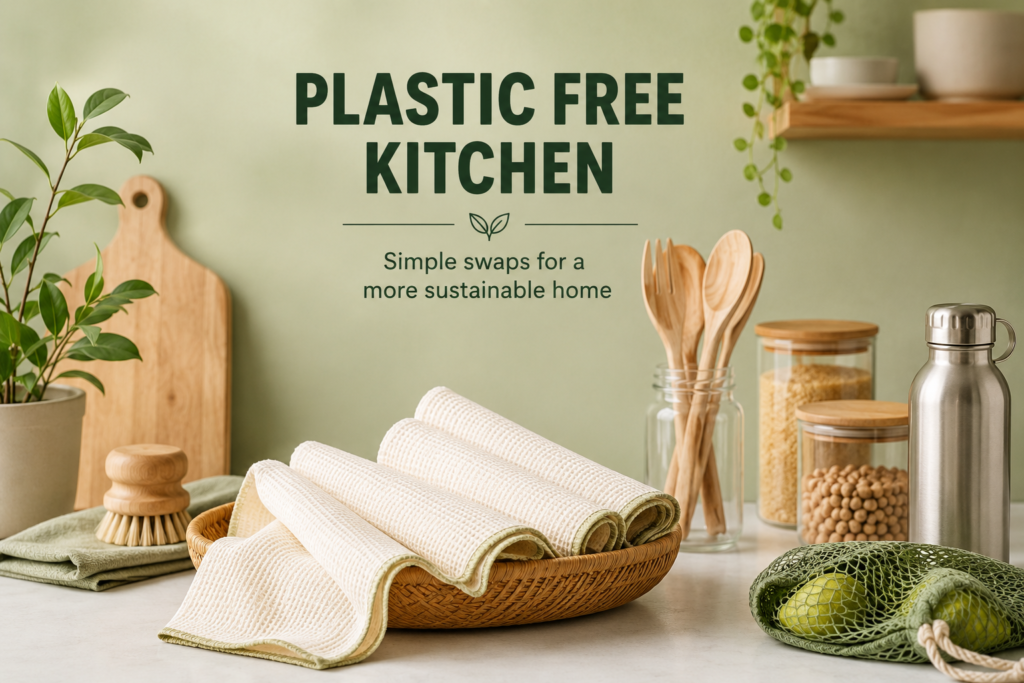
Creating a Plastic Free Kitchen is one of the most effective ways to reduce household waste and support a more sustainable lifestyle. As more Canadians become aware of the environmental impact of single-use plastics, many are looking for practical ways to make their homes greener without sacrificing convenience.
Fortunately, building a plastic-free kitchen does not require a complete overhaul. Small changes, such as switching to bamboo paper towels, reusable containers, and eco-friendly cleaning products, can make a significant difference over time. Whether you’re just starting your sustainability journey or looking to improve your existing habits, this guide will help you create a cleaner, greener kitchen.
Visit here to get a Reusable Bamboo Paper Towel Subscription
What Is a Plastic Free Kitchen?
A Plastic Free Kitchen is a kitchen designed to minimize or eliminate the use of single-use and unnecessary plastic products. Instead of relying on disposable plastic wraps, bags, containers, and cleaning supplies, homeowners choose reusable and sustainable alternatives.
The goal is not perfection. Rather, it’s about making conscious choices that reduce waste, lower environmental impact, and support long-term sustainable living.
Some common features of a plastic-free kitchen include:
- Reusable food storage containers
- Bamboo paper towels
- Glass jars and containers
- Stainless steel utensils
- Compostable cleaning products
- Refillable household essentials
Why More Canadians Are Creating a Plastic Free Kitchen
Across Canada, sustainability is becoming a growing priority. Consumers are increasingly seeking ways to reduce waste, lower their environmental footprint, and make more responsible purchasing decisions.
Several factors are driving this shift:
- Growing awareness of plastic pollution
- Increased focus on sustainable living
- Rising interest in eco-friendly home products
- Support for reusable household products
- Desire to reduce long-term household expenses
For many households, the kitchen is the easiest place to start because it contains many everyday items that can be replaced with sustainable alternatives.
Environmental Benefits of a Plastic Free Kitchen
Reducing plastic consumption offers several environmental benefits.
Key Benefits Table
| Benefit | Impact |
| Less landfill waste | Fewer disposable products end up in landfills |
| Reduced pollution | Helps keep waterways and ecosystems cleaner |
| Lower resource consumption | Requires fewer raw materials over time |
| Less household waste | Encourages reuse and responsible consumption |
| Supports sustainability | Promotes environmentally conscious living |
By making simple changes, households can significantly reduce the amount of waste they generate each year.
Plastic Waste Statistics
While exact numbers vary by region and year, environmental organizations consistently report that millions of tonnes of plastic waste are generated annually worldwide.
Key trends include:
- Single-use plastics remain a major source of household waste.
- Plastic packaging accounts for a significant portion of discarded materials.
- Reusable alternatives can substantially reduce waste over time.
- Consumer demand for sustainable products continues to grow.
These trends highlight why many families are embracing eco-friendly kitchen practices.
Common Plastic Items Found in Most Kitchens
Many people are surprised by how much plastic exists in their kitchens.
Common examples include:
- Plastic wrap
- Plastic sandwich bags
- Disposable paper towel packaging
- Plastic food containers
- Plastic dish brushes
- Plastic cleaning sponges
- Plastic water bottles
- Plastic storage bins
Identifying these products is the first step toward creating a more sustainable kitchen.
Best Plastic-Free Swaps for Everyday Use
Bamboo Paper Towels
One of the easiest changes you can make is replacing disposable paper towels with bamboo paper towels.
Benefits include:
- Reusable and washable
- Durable and absorbent
- Long-lasting
- Generates less waste
- Suitable for everyday cleaning tasks
Many households find that best bamboo paper towels quickly become one of their favorite eco-friendly kitchen upgrades.
Reusable Food Storage Options
Instead of disposable plastic bags, consider:
- Silicone storage bags
- Beeswax wraps
- Reusable produce bags
- Fabric food covers
These products help reduce waste while keeping food fresh.
Glass Containers
Glass containers offer several advantages:
- Durable and reusable
- Easy to clean
- Free from plastic-related concerns
- Suitable for meal preparation and storage
Glass jars can also be used to organize pantry staples such as rice, pasta, and spices.
Stainless Steel Kitchen Tools
Many plastic kitchen tools can be replaced with stainless steel alternatives.
Examples include:
- Measuring cups
- Mixing bowls
- Straws
- Water bottles
- Food preparation tools
These products are durable and often last for many years.
Compostable Cleaning Products
Traditional cleaning supplies often contain plastic packaging.
Consider alternatives such as:
- Compostable scrubbers
- Plant-based cleaning products
- Refillable cleaning solutions
- Natural dish brushes
These options help reduce household waste while maintaining a clean kitchen.
Why Bamboo Paper Towels Are One of the Easiest Sustainable Kitchen Upgrades
Among all sustainable kitchen products, bamboo paper towels stand out because they require very little lifestyle adjustment.
Comparison Table
| Feature | Traditional Paper Towels | Bamboo Paper Towels |
| Reusable | No | Yes |
| Washable | No | Yes |
| Waste Generated | High | Low |
| Long-Term Value | Lower | Higher |
| Sustainability | Limited | Excellent |
Because they can be reused multiple times, bamboo paper towels help reduce waste while offering excellent cleaning performance.
For many households, this single change serves as an easy introduction to sustainable living.
Step-by-Step Guide to Transitioning to a Plastic Free Kitchen
You don’t need to replace everything at once.
Follow these simple steps:
Step 1: Audit Your Kitchen
Identify disposable plastic products you use most often.
Step 2: Replace One Product at a Time
Start with frequently used items such as paper towels or food storage bags.
Step 3: Choose Durable Alternatives
Focus on reusable products that provide long-term value.
Step 4: Create New Habits
Keep reusable products easily accessible to encourage consistent use.
Step 5: Continue Improving
As products wear out, replace them with more sustainable options.
Cost Savings of Sustainable Kitchen Products
Many people assume sustainable products are more expensive. While some alternatives have higher upfront costs, they often save money over time.
Reusable products can reduce repeated purchases of:
- Disposable paper towels
- Plastic bags
- Plastic wrap
- Single-use cleaning supplies
Over several years, these savings can become significant.
Mistakes People Make When Creating a Plastic Free Kitchen
Avoid these common mistakes:
- Trying to replace everything immediately
- Purchasing products you don’t actually need
- Choosing low-quality reusable alternatives
- Ignoring product durability
- Focusing on perfection instead of progress
Remember, sustainability is a long-term journey.
Final Thoughts on Creating a Plastic Free Kitchen
Building a Plastic Free Kitchen doesn’t happen overnight, and it doesn’t need to. The most successful approach is to focus on steady, practical improvements that fit your lifestyle.
Simple swaps such as reusable food storage, glass containers, stainless steel tools, and bamboo paper towels can significantly reduce household waste while supporting a more sustainable future.
Rather than aiming for perfection, focus on progress. Every reusable product you choose helps move your home closer to a cleaner, greener, and more sustainable kitchen.
Frequently Asked Questions
Is it expensive to create a Plastic Free Kitchen?
Not necessarily. Many changes can be made gradually, allowing costs to be spread over time.
What is the easiest plastic-free swap?
Many people find bamboo paper towels to be one of the simplest and most effective upgrades.
Are bamboo paper towels reusable?
Yes. Most reusable bamboo paper towels can be washed and reused multiple times.
Can a Plastic Free Kitchen really reduce waste?
Absolutely. Replacing single-use products can significantly reduce household waste generation.
What are the best containers for food storage?
Glass containers and reusable silicone bags are popular options.
How long does it take to transition?
Every household is different, but gradual changes often lead to more sustainable long-term habits.
Are eco-friendly kitchen products durable?
Many sustainable products are designed to last longer than disposable alternatives.
Can I start small?
Yes. Replacing just one frequently used product can make a meaningful difference.