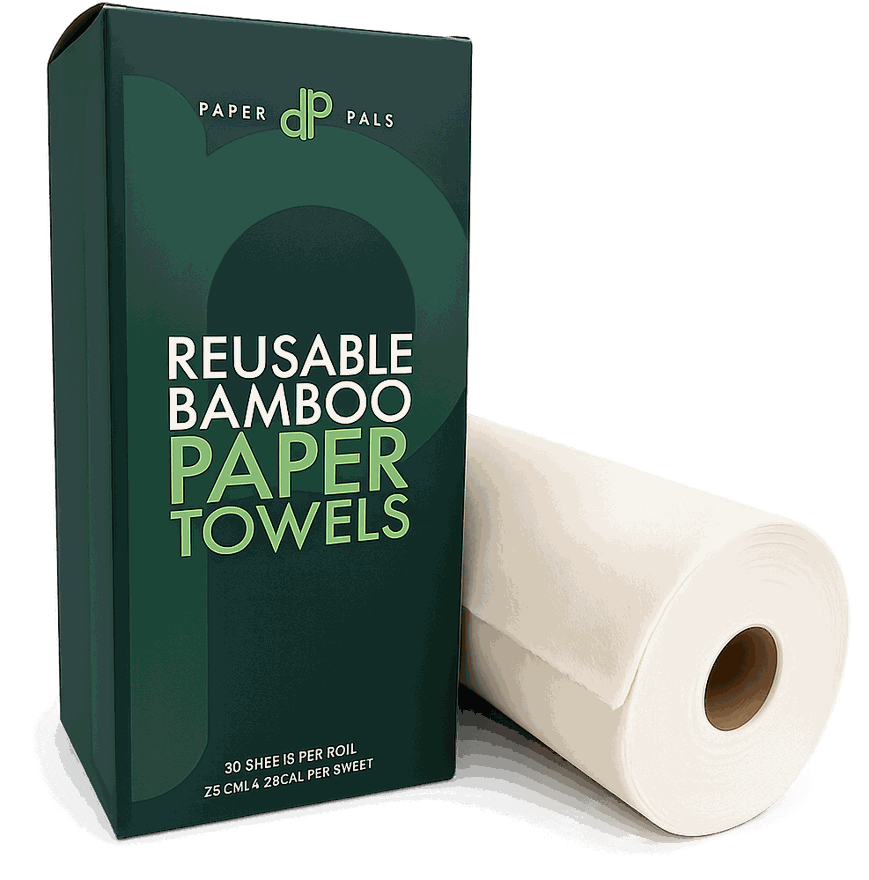
Are Bamboo Paper Towels Better for the Environment? The Truth You Need to Know (2026 Guide)
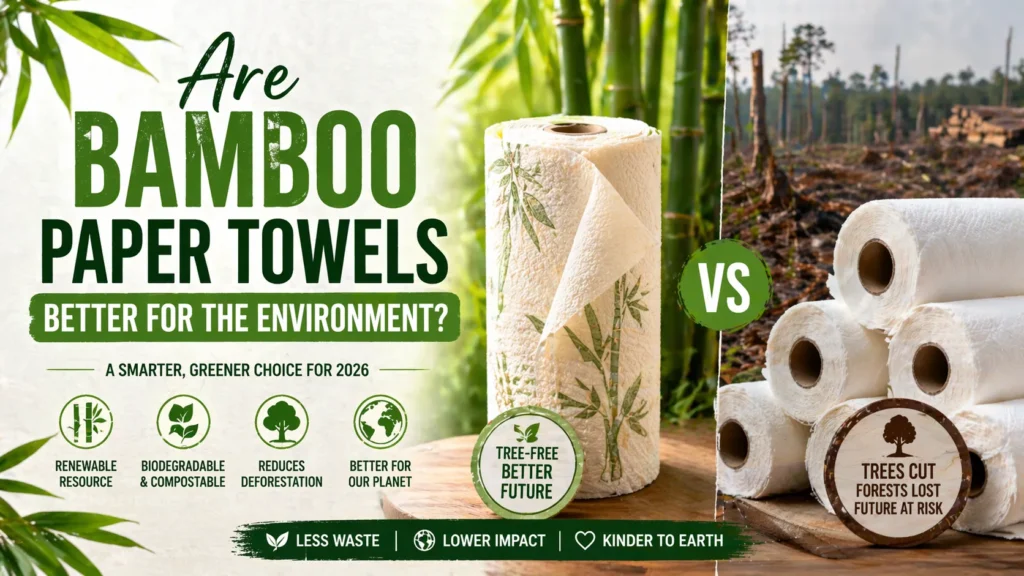
Table of Contents
Every year, millions of trees are cut down just to produce disposable paper products, and paper towels are one of the biggest contributors. I was shocked to learn how something as simple as wiping a kitchen counter could have such a large environmental footprint.
That’s when I started asking: are bamboo paper towels better for the environment? With sustainability becoming more important than ever in 2026, many households are switching to eco-friendly alternatives. But are bamboo paper towels truly the green solution, or just another trend?
Let’s break it down in simple terms.
What Are Bamboo Paper Towels?
How Bamboo Paper Towels Are Made
Bamboo paper towels are made from the pulp of bamboo plants instead of trees. Bamboo grows incredibly fast; some species can grow up to 3 feet in a single day, making it a renewable resource.
The process involves harvesting bamboo, breaking it down into pulp, and then forming it into sheets, similar to traditional paper towels.
What Makes Them Different from Regular Paper Towels
The key difference is the raw material. Traditional paper towels rely on trees, while bamboo towels use a tree-free paper alternative. This reduces pressure on forests and promotes sustainable production.
Bamboo vs Regular Paper Towels Environmental Impact
Resource Consumption (Water, Energy, Land)
Bamboo generally requires less water and fewer pesticides compared to trees. It also grows on less land, making it a more efficient resource.
Deforestation Caused by Paper Towel Production
Traditional paper towel production contributes significantly to deforestation. Forests are cleared to meet global demand, which harms biodiversity and increases carbon emissions.
Switching to bamboo helps reduce this impact because it doesn’t rely on cutting down trees.
Tree-Free Paper Alternatives Explained
Bamboo is one of the most popular tree-free paper alternatives, along with recycled paper and hemp. These options aim to reduce environmental damage while still offering convenience.
Are Bamboo Paper Towels Biodegradable and Compostable?
How Fast Bamboo Breaks Down
Yes, most bamboo paper towels are biodegradable. They break down much faster than conventional paper towels, especially if they are free from chemicals.
Composting vs Landfill Impact
In composting conditions, bamboo towels decompose quickly and return nutrients to the soil. In landfills, they still break down faster than traditional towels but may produce methane if oxygen is limited.
Carbon Footprint of Bamboo Farming vs Tree Farming
Growth Speed and Regeneration
Bamboo regrows naturally after harvesting, without needing replanting. This makes it highly sustainable and reduces farming impact.
Transportation and Processing Emissions
However, most bamboo products are manufactured overseas and shipped globally. This increases their carbon footprint, which can offset some environmental benefits.
Chemicals in Traditional Paper Towels vs Bamboo Alternatives
Bleaching and Toxic Chemicals
Traditional paper towels often contain chlorine bleach and other chemicals. These substances can harm both the environment and human health.
Are Bamboo Towels Chemical-Free?
Not all bamboo paper towels are chemical-free. Some still go through processing that includes chemicals. It’s important to look for unbleached or certified eco-friendly options.
Performance Comparison: Are Bamboo Towels Actually Better?
Absorbency and Strength
Bamboo paper towels are known for being strong and highly absorbent. In many cases, they outperform traditional paper towels.
Reusability and Durability
Some bamboo towels are reusable and can be washed multiple times, making them even more sustainable.
Downsides of Bamboo Paper Towels You Should Know
Cost Comparison
Bamboo paper towels are usually more expensive than regular ones. This can be a barrier for some households.
Greenwashing Concerns
Not all products labeled “eco-friendly” truly are. Some brands exaggerate sustainability claims, a practice known as greenwashing.
Hidden Environmental Trade-Offs
Transportation emissions and processing methods can reduce the overall environmental benefit of bamboo products.
Sustainable Kitchen Swaps (Beyond Bamboo Towels)
Reusable Cloth Options
Reusable cloths are one of the most eco-friendly options. They can be washed and reused hundreds of times.
Popular Eco Swaps in the United States
In the U.S., people are switching to reusable wipes, recycled paper towels, and compostable products.
Sustainable Kitchen Swaps Canada (Trend Insight)
In Canada, sustainable living trends are growing fast, with many households adopting bamboo and reusable alternatives.
What Are the Best Paper Towels for the Environment?
The best option depends on your needs:
- Bamboo paper towels: renewable and biodegradable
- Recycled paper towels: reduce waste
- Reusable cloths: most sustainable long-term
If your goal is maximum sustainability, reusable options are the best. Bamboo is a strong second choice.
Final Words
So, are bamboo paper towels better for the environment?
Yes, in most cases, they are a better choice than traditional paper towels.
They reduce deforestation, use fewer resources, and are biodegradable. However, they are not perfect. Factors like cost, transportation, and processing still matter.
If you want to make a positive environmental impact without giving up convenience, bamboo paper towels are a smart step forward.
Key Takeaways
- Bamboo paper towels reduce deforestation
- They are biodegradable and often compostable
- They use fewer resources than traditional paper towels
- Some products still contain chemicals
- Reusable cloths remain the most eco-friendly option
FAQs
Are bamboo paper towels eco-friendly?
Yes, they are more eco-friendly than regular paper towels due to renewable sourcing and biodegradability.
Do gynecologists recommend bamboo toilet paper?
Some recommend it if it’s chemical-free and soft, but it depends on individual sensitivity.
What do the Japanese use instead of paper towels?
Many use reusable cloths or minimal disposable products to reduce waste.
What is the downside of bamboo toilet paper?
It can be more expensive and sometimes involves chemical processing.
What are the disadvantages of bamboo products?
Higher cost, possible chemical use, and transportation emissions are key drawbacks.
What are the best paper towels for the environment?
Reusable cloths are best, followed by bamboo and recycled paper towels.