Bamboo vs Regular Paper Towels: The Honest Comparison Canadians Need
Walk into any Canadian grocery store and you’ll find an entire aisle of paper towels. They all look pretty similar. They all claim to be strong, absorbent, and great for your home. But here’s the truth most brands don’t want you to know: not all paper towels are created equal, and the differences go way deeper than just price.
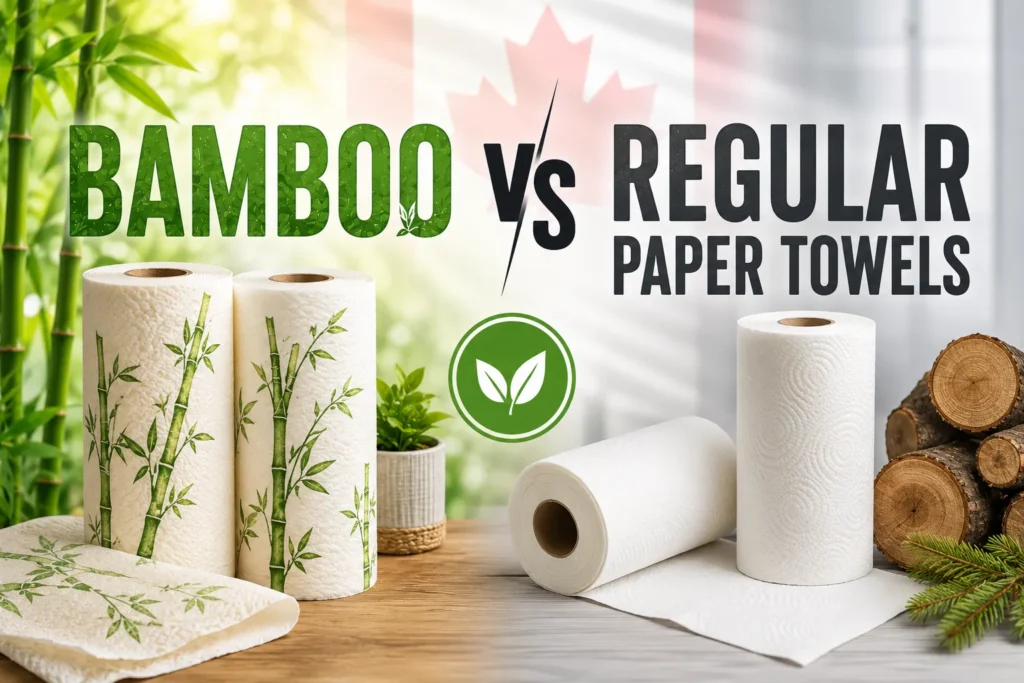
If you’ve been hearing more about bamboo paper towels lately and wondering whether they’re actually better than regular ones, you’re in the right place. This is the honest, straightforward comparison that Canadians actually need, covering everything from environmental impact and chemicals to cost, performance, and compostability.
Let’s get into it.
What Are Regular Paper Towels Actually Made Of?
Before we compare, you need to understand what goes into a conventional paper towel.
Most regular paper towels are made from virgin wood pulp, meaning trees are cut down specifically to make them. In Canada alone, billions of paper towels are used and thrown away every year. Each roll you toss in the trash took a tree to make, used enormous amounts of water to process, and generated significant carbon emissions during manufacturing.
During production, what are paper towels made of beyond just wood? The pulp goes through a heavy chemical process:
- Chlorine bleaching to make them white
- Formaldehyde treatments to make them strong when wet
- Synthetic dyes and fragrances for scented or colored varieties
- PFAS coatings in some brands for grease resistance
By the time a paper towel reaches your kitchen, it has been through a chemical gauntlet. And after one use, it goes straight into the trash, taking hundreds of years to fully break down in a landfill.
What Are Bamboo Paper Towels Made Of?
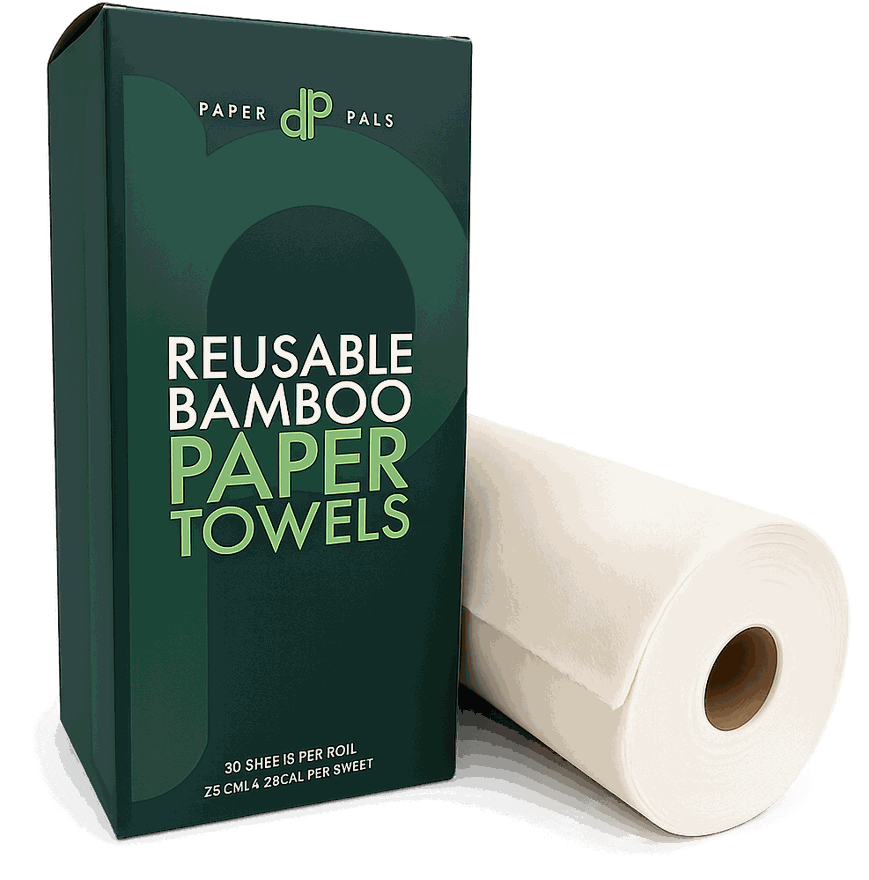
Bamboo paper towels are made from, you guessed it, bamboo. But what makes bamboo such a better raw material?
Bamboo is the fastest-growing plant on Earth. Some species grow up to 90 centimeters in a single day. Compared to trees, which can take 20 to 50 years to mature, bamboo reaches harvest-ready size in just 3 to 5 years. This means bamboo paper towels are truly tree free paper towels, no forests are cleared to produce them.
Bamboo also grows without pesticides or fertilizers in most cases, and it regenerates from its own root system after harvesting, so the soil isn’t disturbed the way it is with logging.
The best bamboo paper towels use sustainably sourced bamboo paper processed without harsh chemicals. They skip the chlorine bleach, skip the formaldehyde, and skip the synthetic dyes. What you get is a clean, natural product that’s safer for your home and the planet.
Environmental Impact: Which Is Actually Better?
This is the big one. Are bamboo paper towels better for the environment? The data says yes, by a significant margin.
Trees vs. Bamboo
Regular paper towels rely on virgin wood pulp from trees that take decades to grow back. Bamboo’s growth rate vs trees isn’t even close; bamboo wins by a massive margin. Plus, bamboo absorbs more CO₂ and releases more oxygen per acre than most tree species.
Single Use Waste
Single use paper towel waste statistics in Canada are alarming. Canadians throw away millions of tonnes of paper products every year. A typical Canadian family can go through 2 to 3 rolls of paper towels per week, that’s over 100 rolls per year, per household. All of it ends up in landfill.
Bamboo paper towels are reusable. A single bamboo towel can be washed and reused dozens of times before it wears out. This dramatically reduces the amount of waste your household generates.
Compostability
Can you compost bamboo paper towels? Yes, and this is a major advantage. When a bamboo paper towel finally reaches the end of its life, it can go into your compost bin. It’s fully biodegradable. Regular paper towels technically break down too, but only if they’re unbleached and chemical-free, most aren’t. Conventional paper towels treated with formaldehyde and PFAS coatings are not truly biodegradable paper towels in any meaningful sense.
The Bottom Line on Environment
If you care about your carbon footprint, reducing landfill waste, and supporting plastic-free kitchen habits in your Canadian home, bamboo wins this category completely.
Performance: Absorbency, Strength, and Feel
Okay, environment aside, do bamboo paper towels actually work as well as regular ones?
Absorbency
Bamboo fibre is naturally highly absorbent. In side-by-side tests, quality bamboo paper towels absorb as much or more liquid than leading conventional brands. The fibre structure of bamboo allows it to hold onto moisture effectively, making it great for spills, wiping surfaces, and drying hands.
Lint Free Performance
One thing many people notice when switching is that bamboo towels are lint free paper towels. Regular paper towels often leave behind small paper fibres on surfaces, especially on glass or dark countertops. Bamboo towels tend to wipe clean without leaving residue.
Strength When Wet
Regular paper towels often fall apart when they get very wet. Good bamboo towels hold their structure much better, especially after a few washes when the fibres soften and strengthen together. This is one area where the quality varies between bamboo brands, so choose carefully.
Softness
Bamboo fibre is naturally softer than wood pulp. If you’ve ever felt irritated by a rough paper towel on your skin, you’ll appreciate the difference immediately.
Bamboo vs Regular Paper Towels Comparison Table
| Feature | Regular Paper Towel | Bamboo Paper Towel |
| Raw material | Virgin wood pulp (trees) | Fast-growing bamboo |
| Reusable | ❌ No | ✅ Yes |
| Chlorine bleached | ✅ Usually | ❌ No |
| Contains formaldehyde | ✅ Often | ❌ No |
| PFAS chemicals | ✅ Possible | ❌ No (check brand) |
| Lint free | ❌ Often leaves fibres | ✅ Yes |
| Compostable | ❌ Not truly | ✅ Yes |
| Biodegradable | ❌ Not fully | ✅ Yes |
| Cost per use | High (single use) | Low (reusable) |
| Environmental impact | High | Low |
| FSC certified option | ❌ Rare | ✅ Yes |
| Tree free | ❌ No | ✅ Yes |
What About Bamboo vs. Cloth and Microfiber?
Bamboo paper towels also get compared to other reusable options. Here’s how they stack up:
Bamboo Paper Towels vs Cloth Towels
Traditional cloth towels are reusable, but they absorb odors quickly, need frequent washing, and can harbor bacteria if left damp. Bamboo has natural antibacterial properties that regular cotton cloth doesn’t have, making bamboo more hygienic between washes.
Bamboo Paper Towels vs Microfiber
Microfiber cloths are effective cleaners but are made from synthetic plastic fibres. Every time you wash a microfiber cloth, it releases thousands of microplastic particles into the water system. Bamboo is fully natural and releases no microplastics, making it the better choice for anyone pursuing a genuinely plastic free kitchen in Canada.
Certifications: How to Know Your Bamboo Is Legit
Not every “bamboo” product is created with the same standards. Look for these when shopping for sustainably sourced bamboo paper products in Canada:
- FSC Certified: The FSC certified bamboo products label means the raw material was harvested responsibly with verified environmental standards.
- OEKO-TEX Standard 100: This certification confirms the product is free from harmful chemicals, important if you’re buying for family use.
- Explicitly stated “free from” claims: A trustworthy brand will tell you exactly what’s not in their product, PFAS free, chlorine free, formaldehyde free, BPA free.
If a bamboo brand can’t tell you what certifications they hold or what chemicals they don’t use, walk away.
Which Is Cheaper in the Long Run?
Regular paper towels feel cheap because you buy them a roll at a time. But add it up over a year and a Canadian family can spend $150 to $300 annually on disposable paper towels.
Bamboo paper towels cost more upfront, but a single pack can replace dozens of rolls. When you factor in the reusable vs disposable cost, bamboo wins clearly over a 12-month period. You’re buying once and reusing for months.
The Verdict
There’s no category where regular paper towels genuinely beat bamboo, not on safety, not on environment, not on long-term cost, and not on performance.
Bamboo paper towels are tree free, PFAS free, chlorine free, compostable, reusable, lint free, and better for your family. Regular paper towels are none of those things.
If you’re a Canadian household looking to make one simple change that’s better for your health, your wallet, and the planet, switching from regular to bamboo paper towels is the easiest place to start.
People also ask
Are bamboo paper towels better than regular paper towels?
Yes. Bamboo towels are reusable, chemical-free, lint-free, compostable, and cheaper long-term. Regular towels are single-use and loaded with chlorine, formaldehyde, and PFAS.
Do gynecologists recommend bamboo toilet paper?
Many do, especially for sensitive skin. Bamboo is free from chlorine, dyes, and fragrance, common irritants in conventional toilet paper that can cause discomfort.
What is the downside of bamboo toilet paper?
The main downside is cost, bamboo products cost more upfront. Some people also find the texture slightly different at first, though most prefer it after switching.
What is the healthiest paper towel to use?
The healthiest option is unbleached, PFAS-free, chlorine-free, and formaldehyde-free. Bamboo paper towels check all these boxes, making them the safest choice for families.
What are the disadvantages of bamboo material?
Bamboo products cost more upfront, availability varies by region, and quality differs between brands. Always look for OEKO-TEX or FSC certified products to ensure real quality.
What do the Japanese use instead of paper towels?
Japanese households traditionally use small reusable cotton cloths called “fukin” for kitchen cleaning and “tenugui” for hand drying, both washed and reused regularly, similar to bamboo towels.